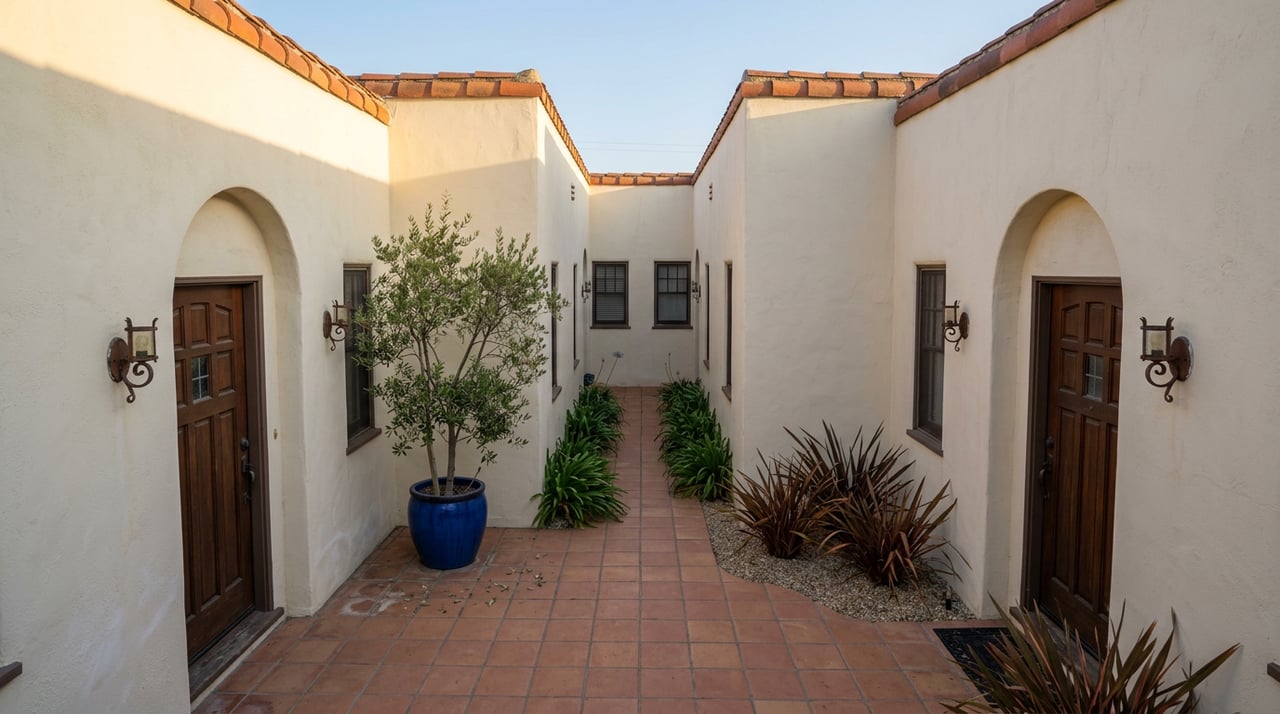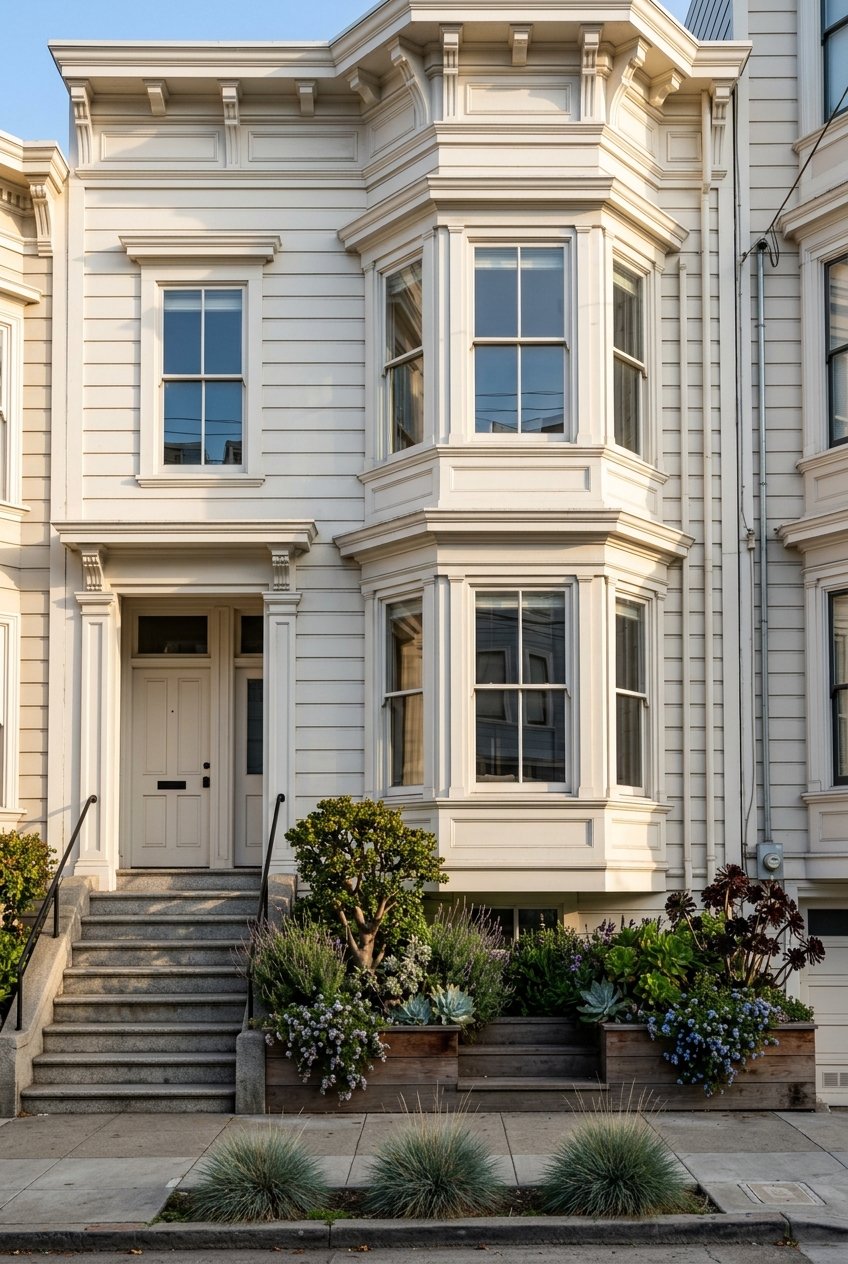
Wondering what gives Russian Hill its unmistakable look? It is not just the views or the slope. This neighborhood stands out because its architecture changes block by block, blending ornate older homes, calmer post-1906 buildings, Bay Area shingle-style houses, and boutique multifamily properties into one of San Francisco’s most visually layered places. If you are buying or selling here, understanding that mix can help you better read value, lifestyle, and long-term appeal. Let’s dive in.
Russian Hill’s Architectural Identity
Russian Hill is shaped as much by its terrain as by its buildings. San Francisco Planning describes the neighborhood as a balance of low older buildings and tall slender towers, with height increasing toward the hilltop, along with detailed retaining walls and landscaping.
That larger pattern matters when you experience the neighborhood in person. Russian Hill Neighbors describes a compact, stair-filled area with small alleys, cottages, gardens, and wide views. In practical terms, that means one block can feel intimate and tucked away, while the next opens up dramatically to the city or bay.
Why Russian Hill Feels So Distinct
Russian Hill does not read like a single-style neighborhood. Instead, it feels layered and highly legible, with each era leaving behind a visible mark. That is a big part of why the area feels historic and livable rather than generic.
Preservation has helped protect that identity. Russian Hill Neighbors notes that Vallejo Crest, the Paris Block, and Macondray Lane received National Register status in 1988, and San Francisco Planning explains that historic districts bring together places with shared history and character.
Victorian and Italianate Roots
Some of Russian Hill’s earliest homes date back to the 1850s, when the hill was still reached by dirt paths and wooden stairways. The Atkinson House at 1032 Broadway is dated to 1853, and Russian Hill Neighbors identifies 1853 to 1863 as the neighborhood’s first building period.
If you are drawn to classic San Francisco architecture, this is where a lot of the visual language begins. San Francisco Planning describes Victorian-era buildings as having ornamented facades, bay windows, steep roof pitches, shingles, and multiple textures and colors.
What Buyers Notice in Victorian Homes
These homes often offer the period detail that people picture when they think of historic San Francisco. You may see layered millwork, decorative surfaces, and strong street presence packed onto a compact city lot.
That charm also comes with upkeep considerations. Older wood cladding, shingles, bays, and trim often require more ongoing attention than simpler exterior systems.
Edwardian and Post-1906 Streetscapes
After 1906, Russian Hill added another important layer. San Francisco Planning’s preservation materials describe Edwardian buildings as more restrained than earlier Victorian homes, often featuring wide angled or round bay windows, flat roofs, bulky cornices, and columned porch entries.
This gives many Russian Hill blocks a calmer and more orderly look while still feeling richly detailed. Local sources also point to Pueblo Revival, Spanish Colonial Revival, and Mission Revival architecture appearing in the neighborhood during this rebuilding period.
Why Edwardian Homes Appeal to Many Buyers
For some buyers, Edwardian and post-1906 properties strike a sweet spot. They often feel more understated than high-Victorian homes, but they still retain architectural depth and a strong connection to the neighborhood’s history.
That makes them especially appealing if you want character without quite as much visual ornament. In Russian Hill, they are a key part of the neighborhood’s everyday streetscape.
Bay Area Tradition on the Hill
Russian Hill also holds an important place in the Bay Area’s architectural story. Russian Hill Neighbors says Joseph Worcester and Willis Polk built some of San Francisco’s earliest Arts and Crafts shingle-style houses here, and identifies 1034 and 1036 Vallejo as the oldest surviving shingle-style houses in the Bay Area.
San Francisco Planning’s modern architecture context statement also places Russian Hill within the Second Bay Tradition, a regional modern vernacular that emerged in the late 1930s. These homes often feature wood cladding, large expanses of glass, overhanging eaves, low-pitched roofs, modest scale, and strong sensitivity to site and climate.
The Feel of Bay Tradition Homes
These properties often read differently from ornate period homes. Instead of heavy decoration, the emphasis is on materials, light, and the relationship to the hillside.
For buyers, that can create a more site-specific and quietly expressive living experience. In a neighborhood as topographic as Russian Hill, that sensitivity to setting can feel especially compelling.
Boutique Condos and Small Buildings
Russian Hill’s multifamily architecture is just as varied as its houses. Russian Hill Neighbors points to an elegant Parisian-style apartment building at 1050 Green, several cooperatives built between 1912 and 1926, and later condominium examples like The Hermitage at 1020 Vallejo, a seven-condominium project that won architectural awards.
This matters if you want Russian Hill architecture without taking on the scale of a standalone house. The neighborhood includes smaller condo and cooperative options that still carry architectural interest and a strong sense of place.
A Smaller-Footprint Way to Live Here
Not every buyer wants a large historic home. Some are looking for a city base with design character, manageable upkeep, and a location that still feels deeply tied to Russian Hill’s built fabric.
That is part of what makes the neighborhood so versatile. Within a few blocks, you can move from 19th-century houses to post-earthquake flats to architecturally distinct boutique buildings.
How Architecture Shapes Daily Living
In Russian Hill, architecture is not just about curb appeal. The neighborhood’s steep terrain, stairways, retaining walls, and changing view corridors affect how homes live day to day.
San Francisco Planning emphasizes the relationship between low and tall buildings, landscaping, and detailed retaining walls, while local neighborhood sources highlight stairways, narrow lanes, and block-by-block shifts in outlook. For you as a buyer or owner, that can influence frontage, access, privacy, and how connected a property feels to the street.
Everyday Factors to Pay Attention To
When you are evaluating a Russian Hill property, it helps to look beyond style alone. Consider:
- How you enter the home from the street
- Whether stairs or grade changes affect daily access
- How retaining walls and site features shape the lot
- How views or light may change from one side of the block to the other
- What exterior materials may require ongoing maintenance
These details are part of ownership here, not just background scenery.
Why Preservation Matters in Russian Hill
Preservation is a major reason Russian Hill has held onto such a strong architectural identity. San Francisco Planning says landmark designation is meant to protect, preserve, enhance, and encourage the continued or adaptive use of significant cultural resources.
That framework helps maintain visual continuity across the neighborhood. It also reinforces the sense of scarcity that many buyers respond to in established San Francisco enclaves.
What Preservation Can Mean for Owners
If you own or plan to buy a property in a historic district or one with historic significance, exterior changes may carry added importance. In Russian Hill, San Francisco Planning makes clear that height, massing, and siting are judged in relation to the hill form and city views.
That means the hillside relationship of a property can matter in a more pronounced way than it might in a flatter neighborhood. San Francisco Planning also notes that qualifying historic properties may be eligible for Mills Act tax relief.
What This Means for Buyers and Sellers
For buyers, the biggest takeaway is simple: Russian Hill does not offer one signature home type. It offers a collection of distinct architectural experiences, from ornate Victorian houses to restrained Edwardian flats, from shingle-style Bay Area homes to elegant cooperatives and boutique condos.
For sellers, that same variety creates an important marketing opportunity. A home in Russian Hill is rarely just about square footage. Its architectural style, placement on the hill, relationship to views, and connection to the neighborhood’s historic fabric often play a meaningful role in how buyers perceive it.
A thoughtful strategy starts by identifying what kind of Russian Hill property you have and how it fits into the neighborhood’s larger story. That is often where strong positioning begins.
If you are considering a move in Russian Hill and want clear, strategic guidance on how a property’s architecture, location, and history may influence value, K2 Collective - Kelli + Katie can help you navigate the details with a calm, high-touch approach.
FAQs
What architectural styles are most common in Russian Hill?
- Russian Hill is best known for Victorian and Edwardian buildings, with important examples of First and Second Bay Area Tradition architecture, plus a smaller layer of boutique condos, cooperatives, and apartment buildings.
What makes living in a Russian Hill home feel different?
- The steep terrain, stairways, retaining walls, narrow lanes, and changing views make access, outlook, and site conditions an active part of everyday living.
Why does preservation matter for Russian Hill properties?
- Preservation helps maintain the neighborhood’s visual coherence and historic character, and some qualifying historic properties may be eligible for Mills Act tax relief.
What should buyers evaluate beyond architecture in Russian Hill?
- Buyers should look closely at grade changes, stair access, retaining walls, exterior materials, and how the property sits within the hillside and surrounding streetscape.
Are condos and cooperatives part of Russian Hill’s architectural identity?
- Yes. Russian Hill includes architecturally notable cooperatives, apartment buildings, and boutique condominiums that add to the neighborhood’s layered character.