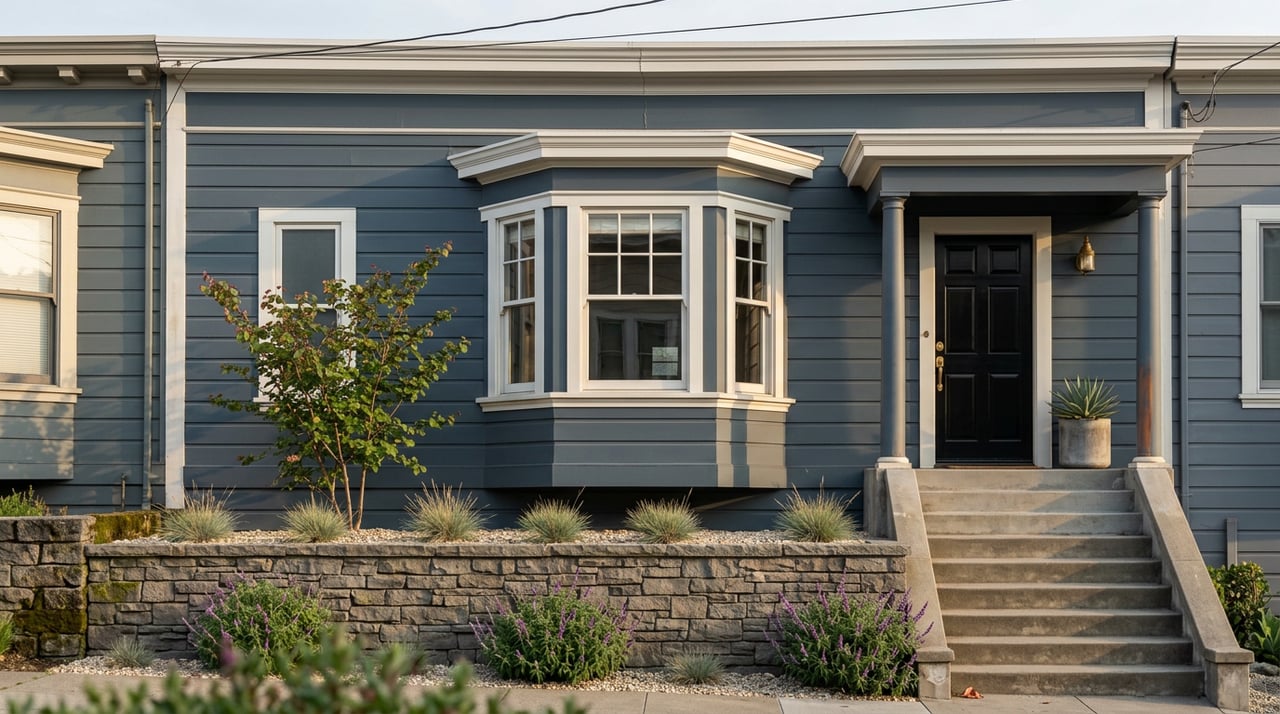
The Real Deal reported that in late July 2026, a buyer closed on a home at 2709 Larkin Street for $20.4 million. There was no bidding war to win or crowded open house to outlast. The deal happened off-market, even though the property had carried a $22.5 million asking price just weeks earlier. The sellers, an entity called Steph-Jim LLC, walked away with about $8.4 million more than they paid for the house in 2010.
If you're comparing Russian Hill to other San Francisco neighborhoods right now, that transaction tells you something the median price never will: a property's public listing history may be brief, and some deals happen off-market.
The Shortage Isn't in the Bank Accounts
San Francisco's luxury market has spent 2026 producing one eye-opening sale after another. A Pacific Heights mansion at 2898 Vallejo Street sold off-market for $56 million in April 2026, the San Francisco Standard reported, with the buyer traced to an entity registered at the same address as Iconiq Capital, a firm known for managing tech fortunes. A Cow Hollow property on Union Street listed at $7.95 million and closed at $15 million in May 2026. Two Presidio Heights mansions traded for a combined $32 million in June 2026, according to The Real Deal.
Sotheby's agent Annie Williams told the Standard the situation amounts to "a housing crisis at the upper end" and, in her words, "a mansion shortage." A New Fillmore report reached the same conclusion in July 2026, citing a Compass count of roughly 590 active listings citywide and noting that demand for larger, high-end homes continued to outpace what was available. But the phrase misleads if you hear it as a shortage of buyers or capital. AI-driven liquidity events have put plenty of money in circulation. What's actually scarce is willing sellers, and that scarcity behaves differently than a simple supply-and-demand story suggests. It isn't that owners can't get their price. It's that a meaningful share of them have no reason to test the market at all.
Four 2026 Deals, One Pattern
| Address | Price | How It Reached the Market | What Triggered the Sale |
|---|---|---|---|
| 2709 Larkin St (Russian Hill) | $20.4M | Off-market, after a brief $22.5M list | Voluntary sale by holding entity, 16 years after purchase |
| 2626 Larkin St (Russian Hill) | $24M | New construction, publicly marketed | Builder sale, one of the neighborhood's priciest on record |
| 888 Francisco St (Russian Hill) | Listed $17.3M in April 2026 | Public listing following owner's death | Estate sale after Bob Fisher's death in October 2025 |
| 2898 Vallejo St (Pacific Heights) | $56M | Fully off-market | Voluntary sale after a multiyear renovation |
The Bob Fisher estate at 888 Francisco Street was listed in April 2026. Fisher was the developer behind more than 1,000 Northern California homes and the younger brother of Gap founder Donald Fisher. The Real Deal noted that a Russian Hill home sold for that same $17.3 million figure after only weeks on the market during the second quarter of 2026, in what appears to be the closing of that same estate listing.
That's the mechanism worth understanding if you're comparing Russian Hill to a neighborhood like Marina or Pacific Heights: a disproportionate share of what actually reaches buyers here arrives because someone died, divorced, or otherwise had to settle an estate, not because a comfortable owner decided it was a good time to sell.
Why Long-Time Owners Don't List Voluntarily
Compass luxury agent Ronda Priestner put the underlying logic plainly in a conversation with the New Fillmore: owners of one-of-a-kind homes are often sitting on a low tax base, and "there's no motivation financially to sell." A family that has held a Russian Hill property for twenty or thirty years has a cost basis far below today's values. Selling triggers a tax event with no obvious replacement property waiting on the other side, since anything comparable now costs multiples of the original purchase. The rational move, for many of these owners, is simply to stay.
That's why the homes that do change hands skew toward forced transitions. Death ends the calculus entirely. Divorce forces a sale regardless of tax consequences. A trust reaching its distribution terms puts a property on a timeline set by legal documents, not market sentiment. None of that shows up in a public market chart. It shows up in probate filings, divorce settlements, and trust administration schedules that never make it into a market report.
What the Inventory Numbers Actually Hide
San Francisco closed June 2026 with roughly 590 active listings citywide, a figure the New Fillmore attributed to a Compass count, with demand for larger, high-end homes still outpacing what was on the market. Second-quarter 2026 figures compiled from San Francisco MLS records show the median single-family sale price citywide reached $2.15 million, up 22.2 percent year over year, with 84.8 percent of sales closing above list price and quarter-end inventory down 49.3 percent from a year earlier.
Russian Hill's own numbers track that tightness. The neighborhood's median sale price stood at $1,924,353 as of May 2026, up 29.4 percent year over year. Single-family homes in the neighborhood typically start around $2 million and climb past $9 million at the luxury end, with condos occupying a separate band between roughly $500,000 and $2 million.
Here's what those figures don't capture: how much inventory never gets counted because it never lists. When a deal like the Larkin Street sale happens entirely off-market, it doesn't add a day to anyone's average days-on-market calculation. It doesn't add friction to an absorption rate. It simply happens, quietly, between people with relationships in the neighborhood. If you're watching public data to gauge how hard it will be to buy on Russian Hill, you're seeing a version of the market that already excludes some of its most competitive transactions.
What This Means for Buyers
If your search strategy depends on watching new listings hit the portals, you're competing for the minority of Russian Hill inventory that behaves like a normal market. The properties most likely to match the profile you actually want, a single-family home with real character in the $3 million to $9 million range, are exactly the ones most likely to trade through relationships before they're ever publicly marketed. Buyers who've had success in this tier tend to work with agents who hear about a probate filing or a pending divorce settlement before either becomes public record, not agents who refresh a search filter every morning.
What This Means for Families Facing a Sale
The flip side matters just as much. If your family is navigating a Russian Hill property through a death, a divorce, or a trust distribution, you're not selling into the same market a voluntary seller sees. Estate sales carry their own timeline pressures, multiple stakeholders who may not agree on price or process, and legal steps that have to close before a sale can proceed at all. The agents most useful in that situation aren't necessarily the ones with the flashiest marketing. They're the ones who can coordinate with attorneys, executors, and co-heirs while still running a process that gets the property's real value, whether that means a quiet off-market approach or a short, well-prepared public listing.
A Few Questions Worth Asking Before You Search
Does this pattern hold below the $9 million mark, or just at the very top? The forced-transition dynamic is strongest at the true trophy level, where owners have held property for decades and cost basis gaps are largest. Russian Hill's condo market, which trades in a $500,000 to $2 million range with an average of 48 days on market, behaves closer to a conventional market because turnover happens more naturally as owners relocate for work or lifestyle reasons.
Are all the big Russian Hill sales going off-market? No. The 2626 Larkin Street sale at $24 million was a publicly marketed new construction sale, and it still ranks among the neighborhood's priciest transactions on record. Off-market deals dominate the ultra-luxury resale tier specifically, where privacy and relationship-based introductions matter more to sellers than broad exposure.
If a home is estate-driven, does that mean it's a bargain? Not necessarily. The 888 Francisco Street listing carried a market-rate asking price and sold within Q2 after only weeks, evidence that even estate sales in this neighborhood attract serious competition once they reach the public market.
If you're weighing a purchase or a sale on Russian Hill, the number that matters most isn't the median price you'll find on a portal. It's understanding which category your situation falls into, and building a strategy around the way homes here actually change hands rather than the way the data suggests they should. The K2 Collective works through exactly these situations, from off-market buyer representation to estate and trust-related sales, with the legal grounding to manage the parts of the process that don't show up in a listing description. If you're navigating either side of this market, schedule a confidential market consultation and we'll walk through what your specific circumstances mean for timing, pricing, and strategy.
This article is general information, not legal, tax or financial advice. Consult a qualified professional about your situation.