Two of the most-cited sources for Outer Sunset home values are telling buyers opposite stories about the same twelve months. One says the neighborhood's typical sale price jumped by roughly a fifth. The other says the average home actually lost value. Both numbers are correct. Neither one describes the whole market, because the Outer Sunset right now isn't a single market. It's two markets running on different clocks, and the confusion between them is costing buyers and sellers real money if they anchor on the wrong figure.
Over the three months ending in May 2026, the median sale price in the Outer Sunset was $1.8 million, up 20.5 percent from the same period a year earlier, with homes selling in a median of 13 days. A separate, model-based estimate of the neighborhood's overall home values put the average figure closer to $1.36 million, down about 10.6 percent over the trailing year. If you've searched "Outer Sunset home prices" recently, you've likely seen both numbers on the same afternoon of browsing and had no way to reconcile them.
A Market Thin Enough That One Sale Moves the Number
The reconciliation starts with volume. Only 90 homes sold across the entire Outer Sunset in May 2026, up from 82 the year before. That's not a typo. It's the whole neighborhood, for a whole month. A sample that small means the mix of what happened to close in any given window, not the underlying value of the housing stock, drives the median.
Consider 1738 Great Highway, a three-bedroom, one-bath, 1,510-square-foot home directly across from Ocean Beach. Listed at $1.495 million in early 2026, it went into contract in seven days against fourteen competing offers and closed at $2.6 million, about $1,722 per square foot. A single sale like that, sitting at the top of the comp set, pulls a monthly median hard in one direction. A February 2026 SF Standard feature on the neighborhood's rise also points to a $7.1 million sale, a scale the area's historic housing stock simply never produced before.
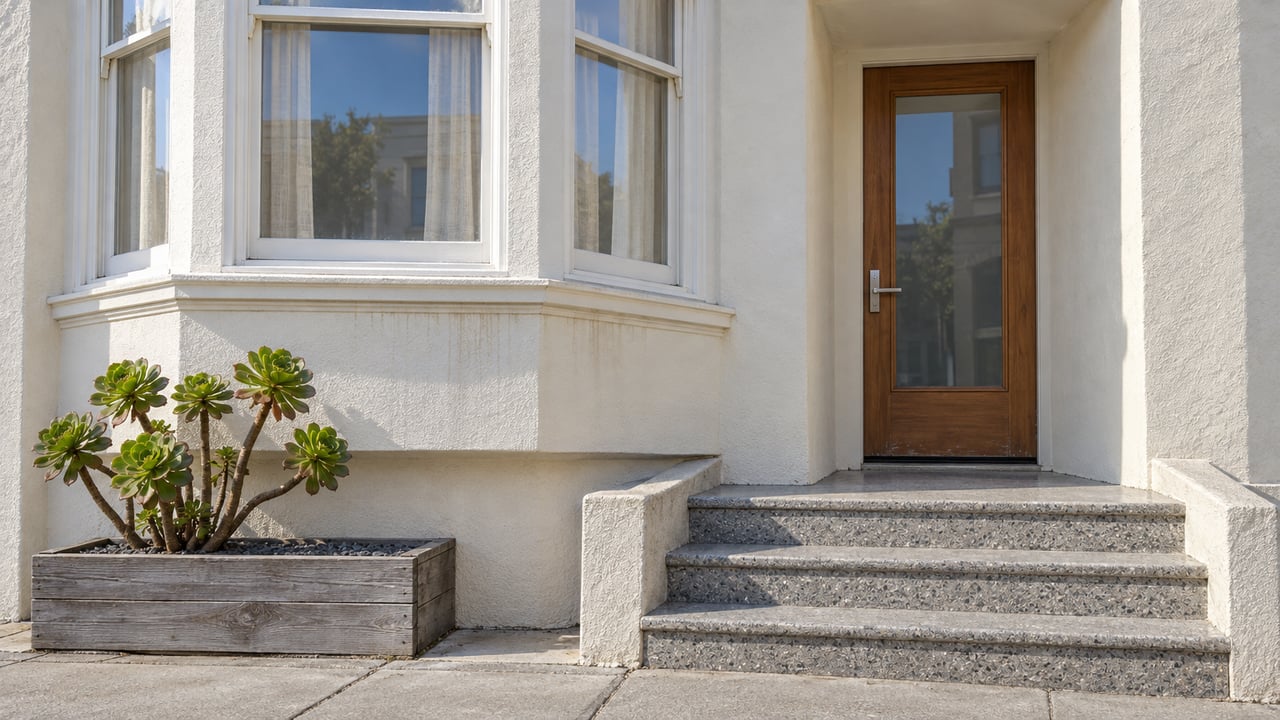
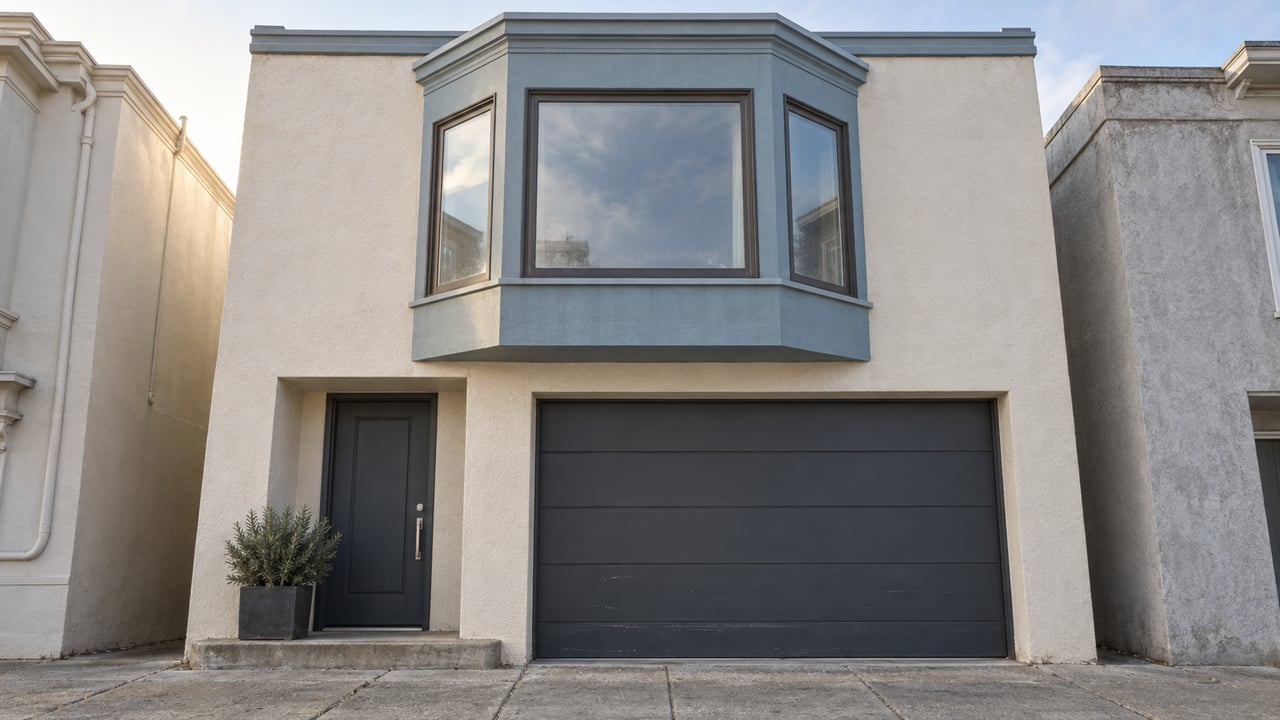
Meanwhile the bulk of those 90 closings are ordinary 1920s-to-1940s Doelger rowhouses several blocks inland, trading in a much narrower and slower band. That's what a broad, model-based average captures and a median doesn't. The Outer Sunset isn't uniformly up 20 percent. A small slice of it, mostly oceanfront and mostly new or heavily upgraded, is up a lot. The rest is holding closer to flat, which is exactly what shows up as a declining average when it's blended against last year's mix.
| Metric | Time window | Figure |
|---|---|---|
| Median sale price | 3 months ending May 2026 | $1.8M (+20.5% year over year) |
| Average home value (model-based) | trailing 12 months | ~$1.36M (down about 10.6%) |
| Homes sold | May 2026 | 90 (up from 82 a year earlier) |
| Median days on market | recent period | 13 days |
Pricing a Category That Doesn't Have a Comp Set
The oceanfront and new-construction end of the market has a second problem layered on top of thin volume: there's almost nothing to compare it to. The Outer Sunset's housing stock was built for a working-class, car-dependent generation, not for architect-designed homes fronting a car-free coastal park. When a builder puts up something genuinely new along the Great Highway corridor, there's no run of closed sales to anchor a list price against.
Listing agents marketing new construction along the Great Highway describe pricing as a way to find where the ceiling sits. The SF Standard reported one of them saying the goal was to "test the market and see what the limits of the Sunset are." With so few closed sales to point to, a list price on a home in this category is a reasonable first estimate that buyers' offers then refine.
That matters for buyers as much as sellers. If you're bidding on one of these properties, your appraisal and your lender are working from the same thin comp set the listing agent is. Financing on a home with no real precedent can move slower and require more documentation than financing on a standard rowhouse three blocks away, even at a lower price point.
Trust Sales Shape Some of the Supply
There's a second reason supply doesn't respond the way a simple demand story would predict. One longtime Outer Sunset agent, profiled by the SF Standard in February 2026, focuses on helping longtime Sunset families sell. About half of that agent's listings are trust sales, homes sold after an owner's death.
That's a structural fact about this neighborhood's supply, not a temporary quirk. A meaningful share of Outer Sunset inventory doesn't arrive because a homeowner decided the market looked good and cashed out. It arrives because an estate needed to settle. Rising prices and park-driven optimism don't pull more of these homes onto the market faster. Families list when probate or a trust administration requires it, on their own timeline, regardless of what Zillow or Redfin says that week.
That decouples price from supply in a way that's easy to miss if you're only reading headline stats. Demand can spike, buyer enthusiasm can build around a park opening, and the number of homes actually available still won't move much, because the release valve is generational turnover, not market sentiment.
For a buyer, that has a practical implication. A trust-sale listing is often priced by heirs or a trustee working through an estate, sometimes with deferred maintenance the family never addressed, rather than by an owner-occupant who staged and updated the home for a top-of-market exit. It's worth budgeting for a closer inspection and treating the asking price as a starting point shaped by estate timing as much as by comparable sales.
The Halo Effect Isn't Even Across the Street
The neighborhood's public narrative treats Sunset Dunes, the car-free park that replaced a stretch of the old Great Highway, as a blanket lift for everything nearby. The retail data doesn't support that as evenly as the story suggests.
Kathryn Grantham, who has run Black Bird Bookstore on Irving Street for nine years, told a reporter for SFGate in the summer of 2025, three months after the park opened, that her sales were up 50 percent over the prior year, with a 30 percent jump specifically following the opening. Her own words at the time: "Tuesdays and Wednesdays at Black Bird are no longer sleepy like they were pre-pandemic."
A few blocks away, Outerlands told the same reporter a different story that summer. General manager Riley Bartlett described business as roughly flat year over year, with weather, not park proximity, still the dominant driver of foot traffic. Two established businesses within walking distance of the same new park, one up sharply and one flat in the months right after it opened, is the retail version of the same lesson the housing numbers teach: a neighborhood-wide label can mask very different outcomes block by block.
What This Means If You're Comparing Neighborhoods
If you're weighing the Outer Sunset against other westside or citywide options, a few things follow from all of this.
Check whether a headline number is a median or a model-based average before you use it to set expectations. A median tells you what the middle transaction looked like in a specific window and can swing on a handful of large sales. A broader average is slower to move but can lag behind what's actually happening at the high end.
If you're looking at a trust-sale listing, ask directly whether it is one. Pricing, condition, and the seller's flexibility on timeline can all look different from a listing where an owner-occupant prepared the home for sale.
If you're drawn to a new or heavily renovated home near the Great Highway corridor, understand you're pricing into a category with very few closed comps. That's not a reason to avoid it. It's a reason to expect a more deliberate appraisal and financing process than you'd get on a standard inland rowhouse.
And if a park, a business opening, or a new development is part of your reasoning for choosing a specific block, look at what's actually happening on that block rather than assuming a citywide narrative applies evenly across the whole neighborhood.
A Few Questions Worth Asking Before You Act
Why do online home-value estimates disagree so much for the Outer Sunset specifically? Because monthly sale volume is low enough that a small number of high-end transactions can swing a median sharply, while a broader, model-based average reflects the slower-moving majority of the housing stock.
Are trust-sale homes priced differently than a typical listing? Often, yes. They're frequently priced by heirs or a trustee managing an estate timeline rather than an owner-occupant optimizing for the strongest possible exit, and they can carry more deferred maintenance worth budgeting for during inspection.
Reading a market this thin correctly, before you write an offer or set a list price, is exactly the kind of work that separates a good outcome from a costly guess. If you're weighing a purchase or a sale in the Outer Sunset and want someone to walk through what these numbers actually mean for your specific block and property, The K2 Collective is available for a confidential market consultation.
This article is general information, not legal, tax or financial advice. Consult a qualified professional about your situation.