If a fractional loan on a Marina tenancy-in-common now costs almost what a conventional condo mortgage costs, why does the property itself still list for 10 to 20 percent less? That gap used to have a simple explanation: financing was expensive, and conversion to a full condo deed was coming eventually. Walk through the numbers as they actually stand in 2026, and neither half of that explanation holds up the way it used to.
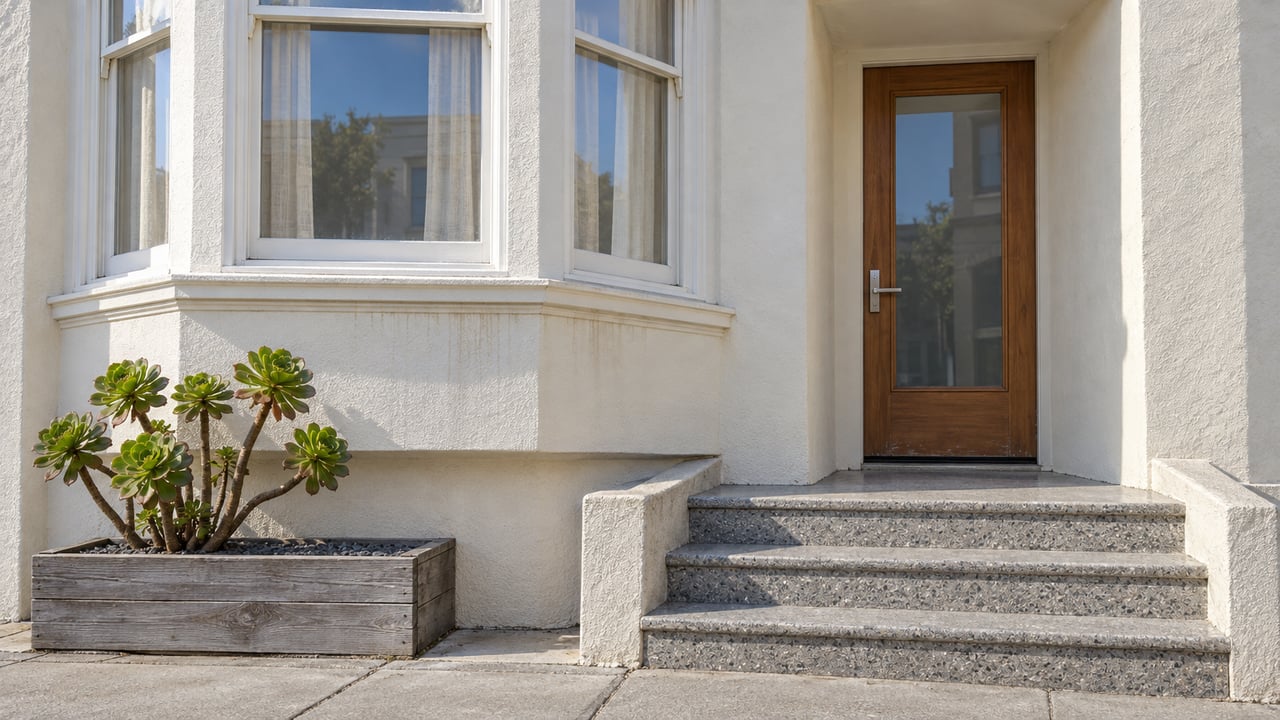
This matters for anyone looking at the Marina's stock of small Art Deco and Edwardian multi-unit buildings along streets like Chestnut, Filbert, and Greenwich, where a meaningful share of what comes on the market carries fractional ownership rather than a recorded condo map. The Marina is one of the neighborhoods where TIC sales concentrate most heavily in San Francisco, alongside Noe Valley and Eureka Valley, the Mission and Mission Dolores, and Nob Hill and Telegraph Hill. If you're comparing a TIC listing to a condo asking price and treating the difference as a temporary inconvenience, you're pricing an old market.
Where the Discount Actually Came From
The traditional TIC trade-off had three parts. Financing cost more, because only a handful of local lenders wrote fractional loans and priced in the added risk. Liability was often shared, because older TICs ran on a single group loan covering every owner, meaning one person's default could put everyone's mortgage at risk. And buyers accepted both of those costs because conversion to a condo, with its own recorded title and a much larger buyer pool, felt like a realistic multi-year outcome.
Two of those three conditions have changed substantially. Individual fractional financing, where each owner secures their own loan against their own percentage interest, is now the standard structure for San Francisco TIC purchases. A default by one owner no longer threatens the others' mortgages in the way it once did. The group loan model that created that cross-default risk still shows up occasionally in older buildings, but it's the exception now, not the rule.
The Rate Gap That Basically Closed
The financing penalty has narrowed sharply. Fractional TIC loans historically carried rate premiums as high as roughly two percentage points above comparable condo financing. Current fractional loan quotes run closer to a quarter to three-quarters of a point above conventional rates. On a $750,000 loan, a half-point premium adds roughly $312 a month in interest at the outset, not a fixed monthly payment difference across a full 30-year term. That's real money, but it's a fraction of what the old rate gap would have cost, and it's nowhere near large enough to explain a 10 to 20 percent price discount on a $1.5 million to $2 million Marina property.
So if the financing penalty no longer accounts for the gap, something else has to.
What the Discount Is Actually Pricing
The answer is the deed itself, and specifically how permanent that deed structure is likely to stay. San Francisco's annual condo conversion lottery, the path that used to let owners of three to six-unit buildings eventually win individual title, has been suspended since 2013. City officials have pointed to a restart "in 2024, 2025, or 2026" for years running, and as of this fall that restart still hasn't happened, according to attorney Andy Sirkin's ongoing tracking of the rules governing San Francisco condo conversion eligibility. For buildings of three units or more, there is currently no functioning mechanism to convert at all, only a promise that keeps rolling forward.
That reframes what you're buying. A TIC in a larger building isn't a discounted condo-in-waiting anymore. It's a discounted, and for now permanent, fractional interest. The one meaningful exception is buildings small enough to skip the lottery entirely.
| Building size | Conversion route | Status in 2026 |
|---|---|---|
| Under San Francisco Subdivision Code Section 1359, Article 9 does not apply to two-unit buildings where both units are owner-occupied for one year before application; eviction history can affect eligibility | Administrative bypass | San Francisco Public Works lists a residential condominium conversion application for two-unit buildings |
| 3 to 6 units | Annual lottery under San Francisco Subdivision Code Section 1396 | Suspended since 2013, restart repeatedly promised, not yet restored |
The bypass for two-unit buildings runs on its own administrative track. It doesn't depend on a citywide restart, a random drawing, or a backlog of thousands of other applicants. That single distinction, two units versus three or more, is doing more work in today's TIC pricing than almost anything else about the property.
What's Actually on the Market
Citywide, 120 TICs sold between January and May of 2026 at a median price of $1.2 million, and 93 of those were in buildings with three or more units, selling for an average of 7.5 percent over list. That's a demand signal worth sitting with: buyers are actively competing for exactly the structure that currently has no real conversion path, which tells you they're evaluating these purchases on their own permanent terms rather than as a stepping stone to something else.
The dollar range in that same window shows how wide the discount runs once you're in higher-demand blocks. Listings spanned a one-bedroom TIC in Noe Valley at $699,000 up to a fully renovated three-bedroom flat on California Street in Pacific Heights at $2.3 million. For comparison, the average condo in Pacific Heights during that period sold for roughly $3.2 million. Only one TIC sale that spring broke the $2 million mark citywide: a two-level penthouse at 430 Greenwich in Telegraph Hill, a three-unit building with bay and city views, two-car parking, and a private elevator.
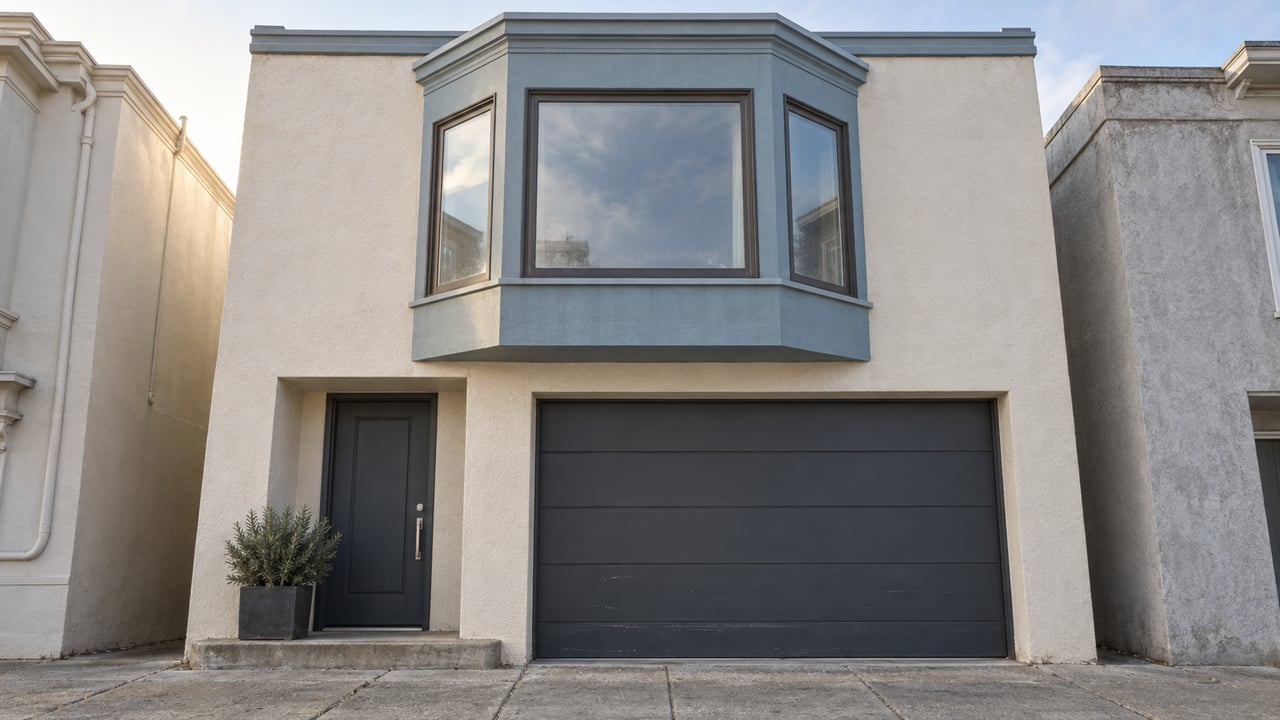
In the Marina itself, one two-unit building currently on the market near the edge of the neighborhood toward Cow Hollow is being marketed explicitly around its bypass eligibility, with an oversized two-car garage, ample storage, and room for future expansion. That's the kind of listing where the conversion path is a real, near-term feature of the property rather than a talking point borrowed from a market that no longer exists.
How to Actually Evaluate One
A handful of questions separate a TIC that's worth its discount from one that isn't:
- Confirm the loan structure is individual and fractional, not a legacy blanket loan that still ties every owner's mortgage together.
- Ask directly how many units are in the building. That number alone determines whether any conversion path exists.
- If it's a two-unit building, verify both units have been owner-occupied for the full 12 consecutive months the bypass requires, and that no qualifying eviction has occurred within the lookback period.
- Read the TIC agreement itself rather than a summary, paying attention to right of first refusal clauses and any restrictions on leasing your unit.
- Compare the discount against a genuinely comparable condo, matched for block, square footage, and condition, not against a citywide median.
The Bottom Line
The Marina's TIC discount isn't a coupon for tolerating extra paperwork anymore. Financing has largely caught up to condo pricing, and the conversion promise that used to justify the gap has been deferred long enough that it no longer functions as a plan. What the discount now represents, for most buildings, is the price of a different and likely lasting form of ownership. That's not a reason to avoid TICs. Plenty of buyers get real, stable value out of them. It's a reason to underwrite one as what it actually is in 2026, not as what it was advertised as a decade ago.
A Few Questions Worth Asking Before You Offer
Will the conversion lottery for larger buildings ever come back? There's no confirmed restart date. The city has cited 2024, 2025, and 2026 in succession without acting, so any conversion timeline for a three-unit-or-larger building should be treated as speculative, not planned.
Are all TIC loans individual and fractional now? Individual financing is the current standard, but some older buildings still carry a legacy group loan covering every owner. Confirm which structure applies before you write an offer, since it changes your actual exposure if a co-owner runs into trouble.
Does the TIC discount ever fully close? For a two-unit building that completes the bypass, yes, the resulting condo can trade at full condo value. For buildings of three units or more, there's currently no mechanism guaranteeing that outcome, so the discount should be evaluated as durable rather than temporary.
If you're weighing a Marina TIC against a condo at a similar price point, or trying to figure out what a specific building's unit count actually means for your long-term equity, The K2 Collective can walk through the numbers on a specific listing with you. Schedule a confidential market consultation and we'll help you underwrite the deal you're actually buying, not the one the listing photos are selling.
This article is general information, not legal, tax or financial advice. Consult a qualified professional about your situation.